Master Studio: Design Build. Circular construction as a built 1:1 prototype in the urban context.
zwischen.raum
A circular construction as action architecture in the urban realm.
The climate crisis, resource scarcity, and growing social inequality demand a rethinking of how we build and live. Architecture can no longer remain speculative or abstract. It must be built, tested, shown – and discussed in public.
In this Master Studio, architecture becomes an active, societal practice.
The two‑semester Design–Build Studio explores the future of circular and sustainable construction through a 1:1 architectural intervention in the city. Students develop and realize a demountable, reusable architectural structure made from renewable materials, understood not as an isolated object but as a catalyst for dialogue, encounter, and public discourse.
During the first semester, students design a sculptural architectural element that is lightweight, modular, mobile, and fully demountable. The design process combines AI‑supported design strategies with material‑based thinking and hands‑on experimentation. Digital tools are used to explore form, structure, and systems, while analogue craftsmanship sharpens constructive precision and material understanding. In parallel, students develop concepts for participatory interventions in the urban space, framing architecture as a medium of communication and exchange.
The current Master Studio (2nd semester) focuses on the realization of an architectural prototype at a 1:1 scale. The project is built at full scale in the workshop at Hochschule Campus Wien and subsequently positioned in the public realm along the Vienna Danube Canal. Installed in the city, the structure functions as an open platform: a place to stay, to meet, to discuss questions of sustainable living, circular material cycles, and resource‑responsible construction.
The studio understands architecture as a continuous process rather than a sequence of separate phases. Designing, testing, developing, and building are closely intertwined. Material choice, construction logic, disassembly, reuse, and future transformation are considered from the very beginning. The built prototype is not conceived as a final solution, but as a test field – a spatial experiment that makes circular construction tangible and visible.
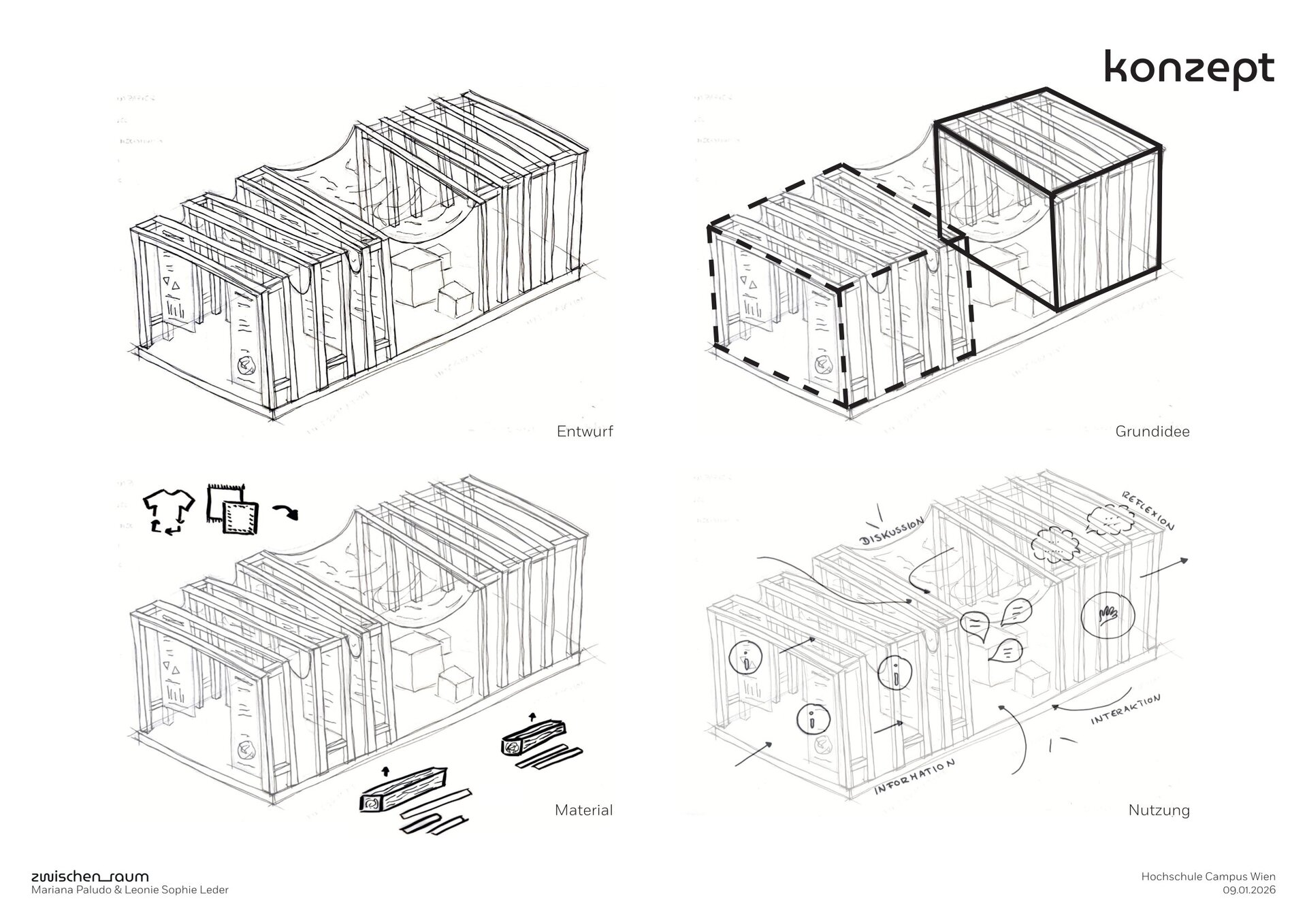
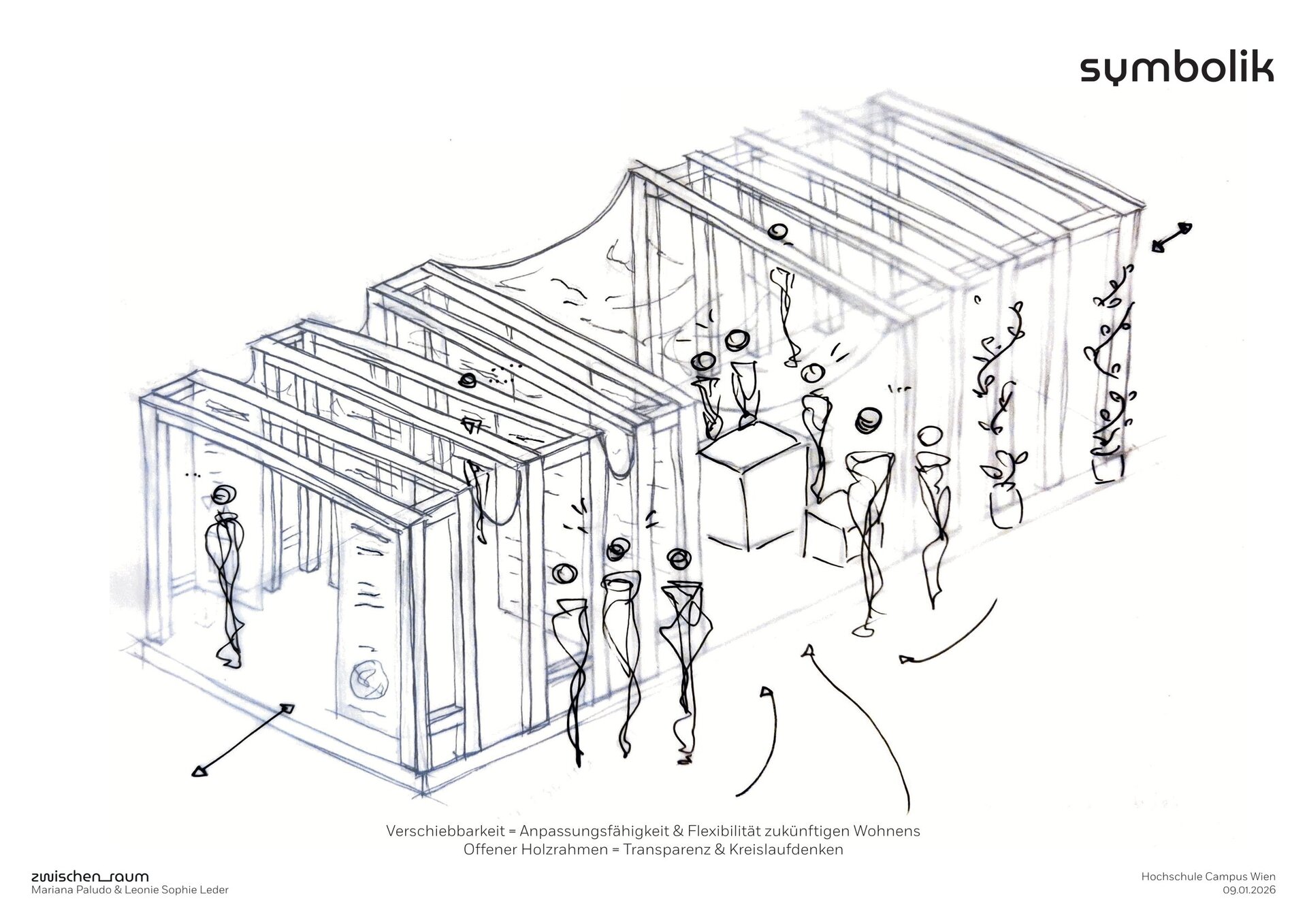
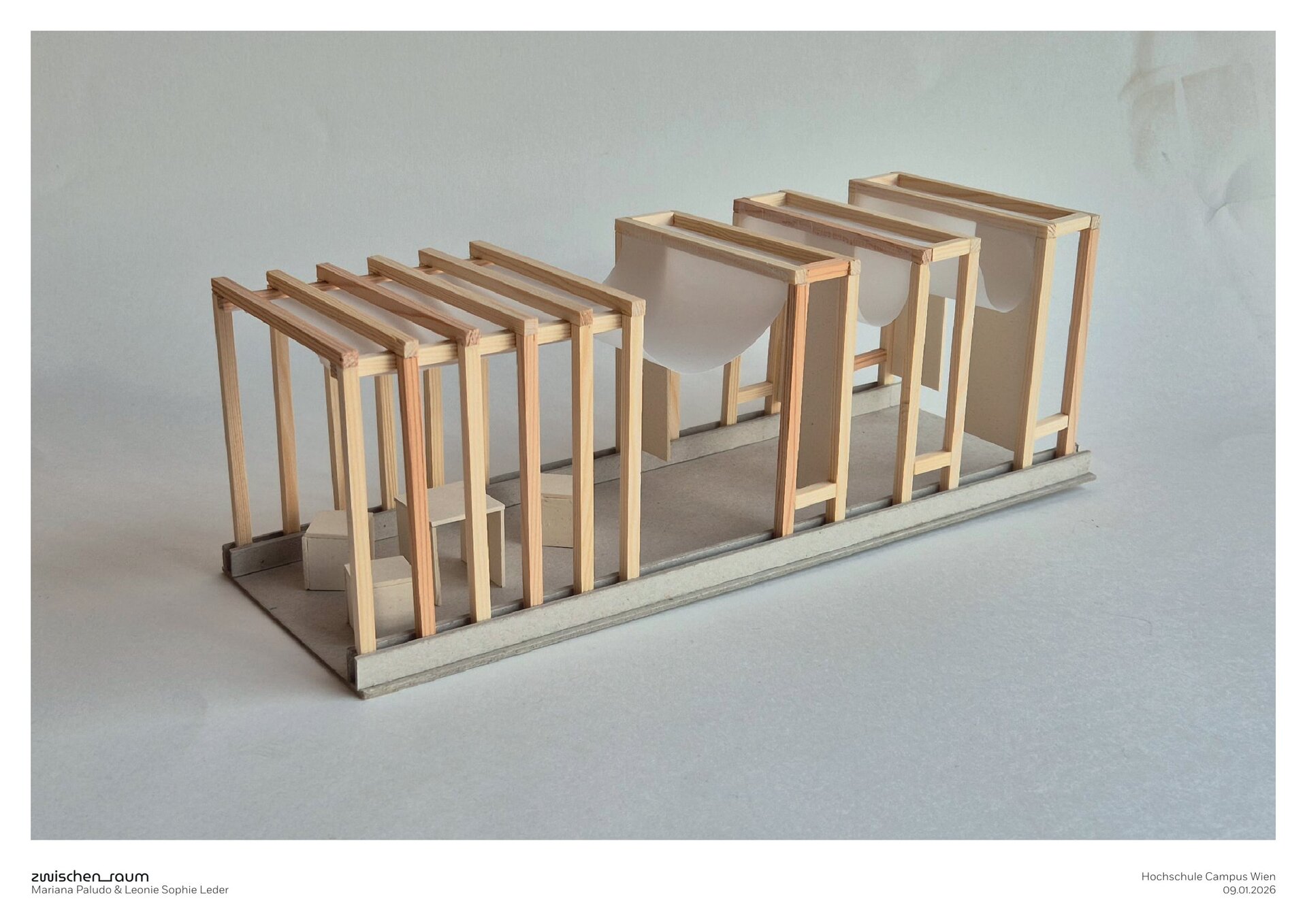
A current design by Mariana Paludo & Leonie Sophie Leder proposes two modular wooden volumes: one fixed and one movable, connected through textile elements. By shifting and reconfiguring the modules, different spatial situations emerge – from spaces for pause and encounter to moments of information and exchange. The structure can be repeatedly adapted to different urban contexts, emphasizing flexibility, reuse, and minimal resource consumption.
As part of the teaching activities of the Green Building Lab, the Master Studio connects design education, material research, and real‑world implementation. The built prototype is not intended as a final solution, but as a test field for circular construction strategies and as a starting point for discussions on climate‑ and resource‑responsible building practices. It positions students as active agents: as designers, builders, mediators, and catalysts who bring questions of circular construction out of the studio and into the city.
Architecture finds public space.
Architecture becomes action.
Architecture engages with people.
Further insights into the ongoing process:
Instagram:wien.zwischen.raum | instagram
LinkedIn: wien.zwischen_raum | LinkedIn